Cigarette filters
Filters contain plastic. They can take years to break down and release toxic chemicals as they weather.
Read moreTobacco products harm people and the planet through toxic plastics, chemical pollution and waste across their lifecycle—damaging ecosystems and shifting costs onto communities and governments.
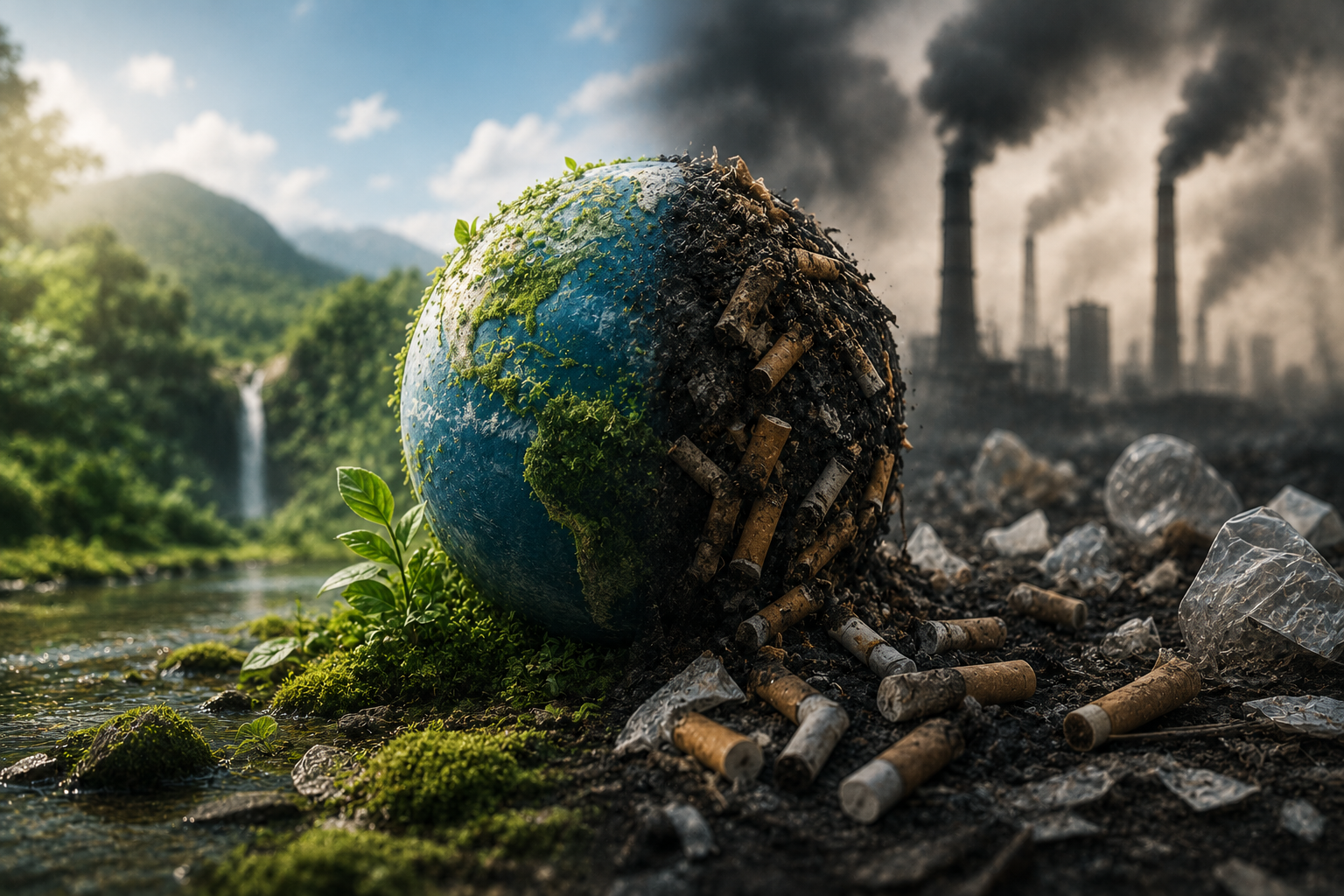
GGTC’s analysis of tobacco’s plastic footprint and the opportunity to tackle it.
Download the ReportFrom production to disposal, tobacco harms the environment and creates costs for people and societies.
See estimates of cleanup costs and marine losses from cigarette-filter and packaging plastics.
These estimates (Sy 2023) cover cigarette-filter and packaging plastics only. They are not the full cost of tobacco, and any other figure in the tool is outside them.
Tobacco products are designed for single use, but their waste can last for years in the environment.
Filters contain plastic. They can take years to break down and release toxic chemicals as they weather.
Read moreVapes contain plastics, metals, and batteries. When discarded, they can leach heavy metals and chemicals. Some may need special electronic or hazardous-waste handling, depending on the product and national law.
Read moreLittered on streets, beaches, rivers, and waterways.
Read moreCleaning, waste management, and environmental damage create costs for governments and communities.
Read moreAnimals can mistake filters and plastics for food. Chemicals can contaminate water and soil.
Discarded products can expose children and pets to nicotine and toxic substances.
Batteries can start fires in waste systems, and harmful chemicals can leach into the environment.
Governments can reduce tobacco’s environmental harm through a combination of policies.
Cut waste before it exists. Restrict filters, limit single-use vapes, and set design and packaging standards.
Explore key resources on tobacco and the environment. Each source shows who published it.